Sewer service in Encinitas is split between more than one agency, which makes the first call after a backup harder than it sounds. The City runs two sewer divisions, and a separate agency serves Leucadia and a neighboring part of town.
Key takeaways
- The City runs two sewer divisions, one of them Cardiff, and a separate district serves part of town.
- A separate agency, the Leucadia Wastewater District, serves residents in Leucadia and much of New Encinitas.
- The City says property owners are responsible for maintaining and repairing the sewer lateral, cleaning up overflows and damages.
- Backed-up sewage counts as Category 3, the highest contamination class, so anything porous it touched is usually cut out and bagged.
- A restoration crew deals with contamination inside the building, while a plumber deals with the pipe.
Who provides sewer service
The City of Encinitas runs two sewer divisions: the Cardiff Sanitary Division and the Encinitas Sanitary Division. A separate provider, the Leucadia Wastewater District, serves residents in Leucadia and much of New Encinitas.
Sewage is sent for treatment to the Encina Wastewater Authority in Carlsbad or the San Elijo Water Reclamation Facility in Cardiff.
What the City says about laterals
The City says property owners are responsible for maintaining and repairing the sewer lateral, for cleaning up overflows and for damages. The lateral is the pipe from the building out to the sewer main.
That rule comes from the City's own sewer pages. Whether it applies inside the district's service area is a question for the district.
Finding out which agency serves an address
Guessing wastes time, because the first call should go to the agency that serves the address. Which division or district serves a particular street is not something to assume.
- Check the sewer or utility bill for the agency name.
- Ask the City if the bill does not say.
- If the property is in Leucadia, ask the Leucadia Wastewater District about its own rules.
- Write down the answer, the date and the name of whoever gave it.
What to do when a drain backs up
A backup usually starts at the lowest drain in the building. The same steps apply no matter which agency serves the address.
- Stop all water use at once, including toilets, showers, laundry and the dishwasher.
- Keep kids and pets out of the wet area.
- Take photos of the backup before moving anything.
- Phone the agency that serves the address, then a plumber for the lateral.
- Phone a restoration crew about the contamination indoors.
What usually causes a lateral to back up
Most laterals block slowly. Something collects on the pipe wall until a wad of material finally closes it.
Knowing the common causes helps a household prevent the next backup.
A one-time clog is cleared and watched. A backup that returns usually points to roots, damage or a sag that a camera inspection will show.
- Grease: pours in as a liquid, then hardens and narrows the pipe.
- Wipes and paper products: they do not break down the way toilet paper does.
- Roots: fine roots enter a joint and grow into a mat that catches debris.
- Age or damage: a cracked or sagging section holds water and solids.
Why speed matters with sewage
Sewage does not get easier to clean as it sits. Contaminated water soaks into padding, drywall and framing, and the longer it stays the deeper the contamination goes.
A restoration crew that starts early removes less material and has less to dry.
- Padding and carpet absorb contaminated water quickly.
- Drywall wicks it upward from the floor, raising the cut line.
- Odor settles into porous surfaces and becomes harder to remove.
- A longer wait gives bacteria more time to spread through the house.
Protecting the household while waiting
Sewage carries bacteria, so the household protects itself first. The main risks are skin contact and splashing.
A few habits make the wait safer.
- Keep children, pets and anyone with a weak immune system out of the wet room.
- Put on gloves and waterproof boots before moving anything, and discard them afterward if they are soaked.
- Wash hands with soap and water after any contact, since sanitizer alone is not enough.
- Shut the door to the room and avoid walking through the wet area.
What the crew does inside
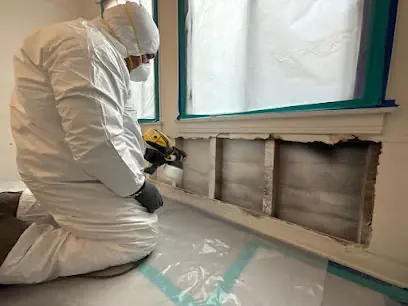
Sewage backup cleanup starts by sealing off the affected area so contamination stays in one place. From there the crew works outward from the worst-hit room.
Each step has a purpose, and none of them depends on the pipe being repaired first once the source is under control.
Sealing off and removing
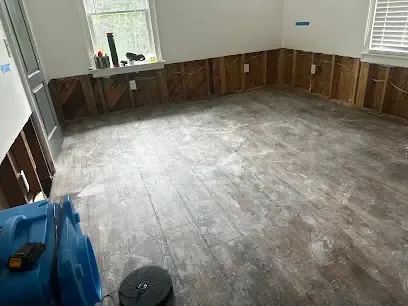
Sheeting goes up, doors close and the air handler is shut off for that zone. Anything porous that touched the water is cut out and bagged, including carpet, pad, trim and the bottom of the wall.
Washing and disinfecting
Tile, concrete and sealed wood are washed, then disinfected with an antimicrobial. Air scrubbers with HEPA filters clean the air while that happens.
Drying the structure
After removal, structural drying begins. Air movers and dehumidifiers run, and the crew records readings until they match a dry reference.
Renters and landlords
In the 2020 Census, 35.0 percent of occupied homes here were rented, so a backup often involves both a tenant and an owner.
A tenant should tell the landlord or property manager in writing, with photos and the date, and ask who is arranging the plumber and the cleanup.
Keeping a record
Several parties may be involved, so a short record helps everyone work from the same facts.
Photos and notes written down on the day are more reliable than memory a week later.
- The time the backup started and the drains it came from.
- Photos of the drain, the water and any damaged belongings.
- The agency that was contacted, the date and the name of the person who answered.
- The plumber's report, if one is written.
Who handles what
Several parties are involved, and each has a defined part. A restoration crew covers the contamination inside, and the others cover the pipes.
- Sewer agency: maintains the public sewer system and takes reports of overflows.
- Plumber: clears or repairs the lateral and the pipes inside the building.
- Restoration crew: seals off, removes, cleans and dries.
- Owner: arranges the lateral repair, after confirming the rule with the agency that serves the address.
- Landlord or property manager: for rentals, a written note starts the conversation.
Questions
Which agencies handle sewer service?
The City runs two sewer divisions, and the Leucadia Wastewater District serves Leucadia and parts of town.
Who is responsible for the sewer lateral?
The City says property owners are responsible for maintaining and repairing the lateral, cleaning up overflows and damages. Leucadia Wastewater District customers should ask the district about its rules.
Where does the sewage go after it leaves a building?
It is sent to the Encina Wastewater Authority in Carlsbad or the San Elijo Water Reclamation Facility in Cardiff.
How can a homeowner find out which agency serves an address?
Check the bill or ask the City, and do not guess from the street name alone.
Can carpet be saved after a sewage backup?
Rarely. Sewage is Category 3, so porous materials such as carpet and pad are normally removed instead of cleaned.
Does the cleanup wait for the lateral repair?
Not once the source is under control. Sealing off and removal can start while the plumber arranges the repair.