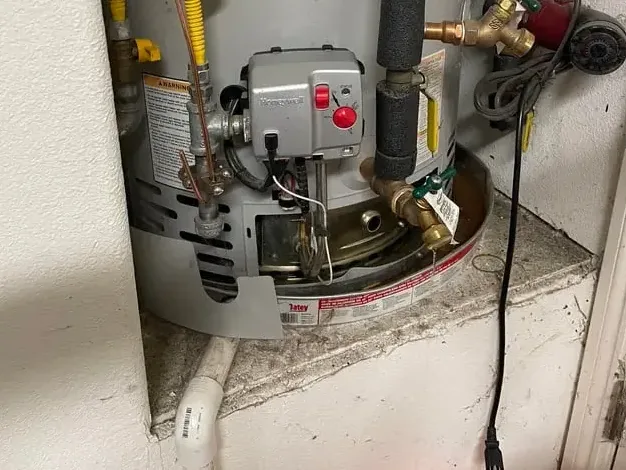
Hard imported water in Poway is tough on water heaters and the supply connectors attached to them. When a tank finally gives out, a full load of water goes straight onto the floor of the garage or closet it sits in.
Key takeaways
- Shut off the cold water supply to the tank first, then turn off the power or gas control for the unit.
- A garage tank spreads water across the slab, while a closet tank sends it into wall framing and flooring next door.
- Water wicks into the bottom of drywall, stored boxes and cabinets quickly, so extraction should start right away.
- A leaking tank is replaced, not repaired, and the plumber's work is separate from the cleanup.
- Drying is finished when moisture readings match a dry reference, not when the floor looks dry.
Why Poway water heaters and connectors fail
Imported water here is hard. Over the years, minerals build up inside a tank and on the fittings around it, which wears them out faster.
The pattern shows up in two places: the tank itself, and the flexible supply connectors that join it to the house plumbing.
A tank usually fails in one of two ways. Either the steel shell corrodes through and weeps from the bottom, or a fitting or valve starts to drip and the leak grows.
Knowing which of the two failed helps the plumber decide what to replace, and it helps the crew judge how long the water was running.
What to shut off first
Closing the supply valve above the tank stops new water from entering. If the valve is stuck or out of reach, the main shutoff for the house does the same job.
- Water: turn the cold supply valve at the tank to the closed position.
- Electric tank: switch off the breaker for the unit.
- Gas tank: turn the gas control to off if it is safe to reach.
- Do not stand in deep water near an electrical panel or outlet.
A garage tank versus a closet tank
Garage tank
In a garage, water flows across the slab toward the lowest spot, often the garage door or a drain. Stored boxes, tools and fabric sitting on the floor soak it up.
It can also seep under the wall into the house, so rooms next to the garage get checked.
Closet or utility room tank
A tank in a closet sends water into the wall base, the flooring of the adjoining hallway or bedroom, and any cabinet next to it.
The enclosed space also holds humidity, which slows drying unless the doors and base materials are opened.
What the cleanup covers
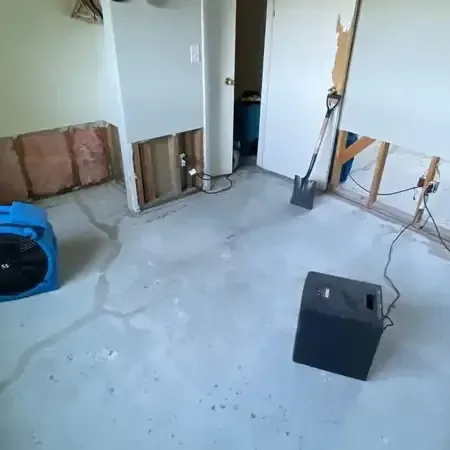
Water heater leak cleanup starts with getting the water off the floor. Extraction units pull standing water from the slab and any carpet or pad it reached, and emergency water extraction crews check the wall bases next to the tank with a moisture meter.
- Baseboard removal: so the bottom of the drywall can dry.
- Wall base drying: a small opening or removed trim lets air reach the cavity.
- Pad and carpet checks: pad that wicked water from a closet is usually removed.
- Stored items: boxes and fabric are sorted into dry, damp and discard piles.
Gas, power and safety after a tank leak
A water heater sits next to either a gas supply or a live electrical connection, and water changes the risk in both cases.
Safety checks come before any attempt to move equipment or wade into deep water.
- Gas smell: leave the house and call the gas utility from outside.
- Electric tank: leave the breaker off until an electrician or plumber checks the unit.
- Outlets and cords: stay clear of anything that touched water until it is inspected.
- Pilot light: do not try to relight it in a wet area, and wait for the plumber.
Saving what can be saved in the garage
A garage often holds more than cars. Holiday decorations, paper files, tools and sports gear sit on the floor or on low shelves, right where the water goes.
Sorting early prevents a second loss. Anything that can dry on its own is lifted onto a dry surface first.
- Cardboard and paper: soaks through and rarely recovers, so photograph it and set it aside.
- Plastic bins: wipe off, empty the contents if wet and let the bin dry.
- Wood and tools: dry them and wipe metal to head off rust.
- Fabric and bedding: wash or dry promptly, and discard anything that stays damp.
Drying and the plumber's role
Air movers and a dehumidifier then run until moisture readings match a dry reference. The crew logs readings daily so it is clear when equipment can come out.
Drying is planned around the room the tank sits in. A garage with a large door and plenty of air movement dries differently from a closet that shares a wall with a bedroom, so the equipment layout changes with the location.
The plumber replaces the tank and checks the connectors, and that work does not have to wait for the floor to dry. Structural drying covers the walls and slab, and appliance and hose leak cleanup covers similar failures at smaller fittings.
Questions to ask the plumber
Replacing a tank is a plumbing job, and a few questions keep the replacement from causing the next leak.
- Connectors: are the supply connectors being replaced along with the tank?
- Drain pan: will a pan with a drain pipe go under the new tank?
- Shutoff valve: does the supply valve work, and does everyone in the house know where it is?
- Location: would moving the tank away from walls and stored items reduce damage next time?
Warning signs worth acting on
Hard water often gives notice before a tank fails. Catching it early turns a flooded garage into a small repair.
- Rust stains or damp spots at the base of the tank.
- Rumbling or popping noises as the water heats, which can come from mineral buildup.
- A weeping valve or a damp supply connector.
- Rusty or cloudy hot water from the tap.
Questions
What should be shut off first when a water heater leaks?
Close the cold water supply to the tank, then turn off the breaker or the gas control. If the supply valve is stuck, close the main for the house.
Can a leaking water heater tank be repaired?
Tanks that leak from the shell are replaced. A plumber can repair a leaking fitting or valve, which is a different failure.
Does a garage water heater leak reach the house?
It can. Water spreads across the slab and can seep under walls, so the rooms next to the garage are checked with a moisture meter.
How quickly does the water need to come out?
As soon as possible. Drywall, boxes and cabinet bases wick water upward, and damage grows while water sits.
Does hard water cause every tank to fail?
No, but mineral buildup shortens the life of tanks and connectors. Watching for rust, noise and damp spots helps catch trouble early.
Is the water from a water heater leak clean?
Usually it starts clean, but water that sits on a dirty garage floor or soaks into porous materials can degrade. Fast extraction keeps it from getting worse.