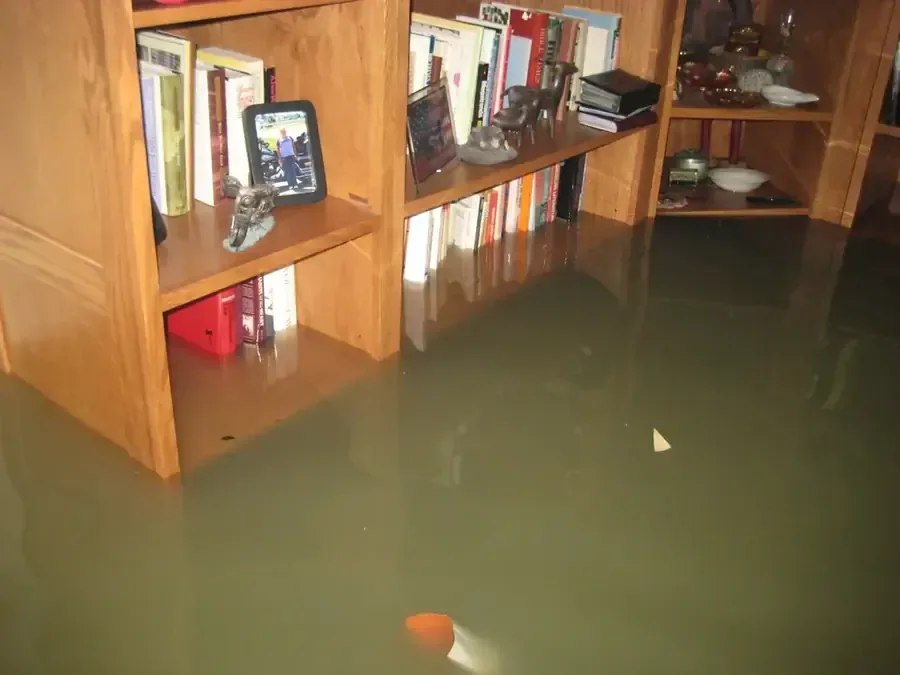
In Poway, a semi-arid inland valley, most rain falls from November to March in a few storms. When one of them hits, runoff from a slope can reach a sliding door or garage threshold before anyone has time to react.
Key takeaways
- Decomposed granite slopes shed runoff toward slabs and sliders, so the lowest door threshold is usually where water enters.
- Runoff crosses soil, yards and driveways on the way in, so it is treated as contaminated water from the start.
- Stay off wet floors near outlets and appliances, move belongings up and photograph the damage before cleanup begins.
- Pumping and extraction come first, then carpet and pad decisions, then structural drying with logged readings.
- A drainage or landscape contractor fixes where the water goes. The restoration crew handles the water that already got inside.
Why runoff finds the slider first
Between storms the slopes stay dry, and decomposed granite sheds water instead of holding it. When a big storm finally drops a lot of rain, that runoff heads for the nearest low point.
Sliding doors and garage thresholds sit right at slab level, so they take the first push of water. A slider track or a garage door seal is built to keep out rain, not a moving sheet of runoff.
Large hillside lots in the north and east give runoff more room to gather speed and volume before it reaches the house, which is why the same storm can leave one yard dry and another one under water.
Tracks, seals and thresholds: where the water gets in
Most runoff entries are small gaps that a dry season never tests. A storm finds them all at once.
Walking the doors before the first big rain is a quick way to see which ones are weak.
- Slider track: clogged weep holes keep water from draining out of the track and push it indoors.
- Weatherstripping: dried, cracked or flattened seals no longer press against the frame.
- Garage door bottom seal: a worn rubber strip leaves a gap along the entire threshold.
- Slab edge and expansion joints: cracks wick water straight into the floor.
- Pet doors and low vents: small openings at slab level let in more than expected.
What runoff carries into the house
Water that crosses a yard, driveway or hillside picks up soil, fertilizer, pet waste and debris. By the time it reaches a threshold it is no longer clean rainwater.
For that reason the work is handled as Category 2 or 3 water: the assumption is contamination, and porous materials that soaked it up are usually removed instead of dried in place.
- Silt: fine sediment settles into carpet, tile grout and the bottom of cabinets.
- Organic matter: leaves, mulch and pet waste carry bacteria that stay in wet padding.
- Chemicals: lawn products and garage items can spread across a slab.
- Debris: rocks and twigs can clog a floor drain or a shop vacuum.
First steps when water is at the door
Safety comes before saving belongings. A flooded garage or living room can hide live outlets, power strips and appliances.
- Stay off wet floors near outlets, cords and appliances.
- Move furniture legs, cardboard boxes and stored items onto higher dry surfaces.
- Keep children and pets out of the wet area until it is cleaned.
- Photograph the water mark on the walls, the door and the floor before anything moves.
- Do not use a household vacuum on standing water.
Why waiting makes it worse
Wet drywall pulls water upward like a wick, and padding holds it against the slab. Over the following day or two, materials swell, edges lift and the humidity in the house climbs.
Silt also dries into a crust that is harder to remove than wet mud. Starting extraction early keeps the job smaller and keeps more of the flooring in place.
Humidity also spreads the problem. Wet air moves into rooms that never saw water, so a dehumidifier and closed doors matter as much as the pumping.
Removing silt without spreading it
Mud tracked from the threshold into carpet and hallways makes a bad situation larger. A few habits keep the mess in one place.
Heavy silt is shoveled or scraped up first, and only then does extraction pull the remaining water from the floor.
- Scrape or shovel mud toward the door, not deeper into the house.
- Bag silt and debris instead of rinsing it down a floor drain, where it can clog the pipe.
- Wear waterproof boots and gloves, since the water and the mud count as contaminated.
- Avoid walking wet silt across dry carpet or hardwood on the way out.
How the cleanup runs
Pumping, silt and extraction
The crew pumps standing water, removes silt and pulls remaining water from carpet and tile. Storm runoff and flash flood cleanup treats the floor with an antimicrobial once the mud is gone.
Carpet, pad and baseboards
Carpet padding that soaked up runoff generally goes. Carpet may be lifted, cleaned and dried if the water was shallow, and baseboards are removed so the bottom of the drywall can dry.
Structural drying
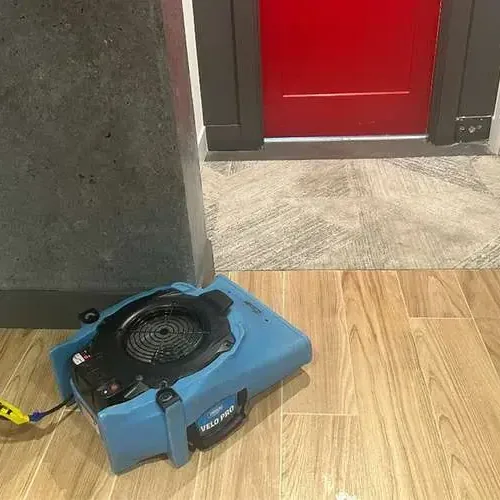
Air movers and dehumidifiers run until readings match a dry reference. Water extraction and drying are logged each visit, so there is a record that the area is dry.
What gets checked around the door
The water that stops at the slider is only part of the story. Moisture travels sideways through the wall base and under flooring.
A moisture meter and thermal camera show how far the water went, which is rarely as far as the visible wet patch.
- Door track and threshold: silt and standing water collect in the track.
- Wall base behind the slider: drywall wicks water upward from the floor.
- Flooring that meets the door: wood, laminate and tile edges are checked for trapped moisture.
- Garage storage: cardboard and stored fabric soak up water quickly and are often discarded.
Before the next Poway storm
A little preparation helps the next time rain is forecast. Clearing gutters, downspouts and yard drains, and watching where water flows off the slope, shows where runoff will go.
Water that enters from above is a different path, handled under roof leak water damage.
Grading, drainage and landscaping work belong to a contractor. The same steps apply from Twin Peaks to Silverset to High Valley, and the cleanup crew handles only the water that gets past the door.
Questions
Is runoff water the same as clean rainwater?
No. Runoff picks up soil, chemicals and waste on the way to the door, so it is treated as contaminated water.
Can a shop vacuum clear a flooded garage?
It can handle a small puddle, but not silt or deep water. Extraction equipment moves far more volume and handles mud without clogging.
Do sandbags stop runoff?
They can slow and redirect shallow water, but they do not seal a threshold. Water that gets past them still needs extraction and drying.
Does carpet always have to come out after runoff?
Padding usually does. Carpet depends on how long it stayed wet and how dirty the water was, which a moisture check helps decide.
Who fixes the drainage problem that let the water in?
A drainage or landscape contractor handles grading and drains. The restoration crew removes the water and dries the structure.
Can a garage with a concrete floor just be hosed out?
Concrete looks tough, but water and silt reach the wall base, stored items and any door seals. A moisture check shows what the surface hides.