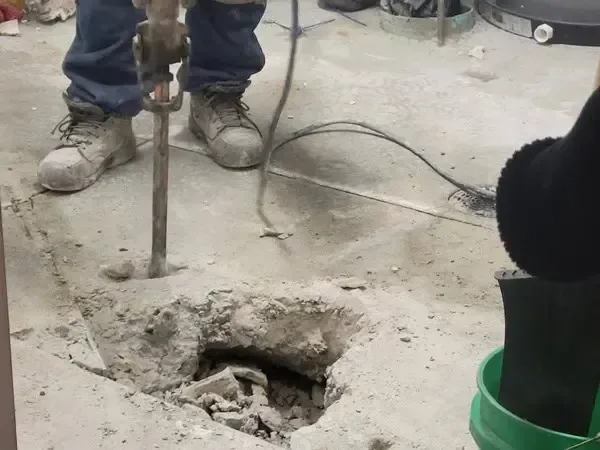
Much of the housing in Poway is single-family homes from the 1970s to the 1990s, built on concrete slabs with copper supply pipe running under the floor. When one of those pipes leaks, the water has nowhere to go but up through the flooring or sideways into the base of the walls.
Key takeaways
- A slab leak is usually quiet: the early signs are a warm floor spot, a water meter that keeps moving and carpet that stays damp along a wall.
- With every tap and appliance off, a moving meter means a leak somewhere. Closing the main valve and watching again shows whether it is inside the house.
- A plumber or leak detection technician finds and repairs the pipe. The restoration crew removes the water the leak already released.
- Flooring over a slab is often lifted where water is trapped, because concrete and sealed floors dry slowly.
- Drying is finished when readings in the floor and walls match a dry reference taken elsewhere in the house, not when the surface feels dry.
Why a slab leak hides in a 1970s to 1990s Poway home
Many houses of this era sit on a concrete slab, with the copper supply pipe cast into the floor or run beneath it. That pipe is under pressure around the clock, so a pinhole or a split fitting keeps pushing water out long after the household has gone to bed.
Because the slab sits at the bottom of the house, the water has two ways out. It can rise through cracks and flooring seams, or it can wick into the base of walls, door frames and cabinets.
A small leak can run for a long stretch before anyone notices, since the soil and concrete soak up water first. By the time a stain appears, the damage under the floor is usually well ahead of what shows on top.
Crews handle this kind of leak across Green Valley, Old Coach, Garden Road and the rest of the service area, and the pattern is the same wherever a slab floor sits over pressurized pipe.
Signs that water is moving under the floor
A slab leak rarely floods a room. It runs slowly and quietly, and the first clues are easy to explain away.
- Warm spot: a patch of floor that feels warm underfoot can mean a hot water pipe is leaking below it.
- Meter movement: the water meter keeps turning with every tap and appliance switched off.
- Damp flooring: carpet stays wet along a wall, a rug feels clammy, or a plank or tile edge starts to lift.
- Sound: a faint hiss or the noise of running water when the house is otherwise silent.
- Swollen baseboards: the bottom edge of the trim swells or the paint bubbles just above the floor.
- Higher bills: water use climbs without any change in how the household lives.
Slab leak or something else?
Not every damp spot is a slab leak. A few quick checks separate the likely causes before anyone is called out.
- Water heater: a wet floor around the tank points to the tank or its connectors, not the slab.
- Appliances: washer hoses, dishwasher supply pipes and ice maker connectors leak at the fitting, and the water usually travels from a visible source.
- AC drain: water under or near an air handler often comes from a clogged condensate drain.
- Irrigation or hose bib: outdoor leaks send water toward the foundation, which can look like a floor problem inside.
- Roof or window: stains high on a wall or around a window follow rain, not the water meter.
The meter test
A meter that moves with everything off is the clearest sign of a pressurized leak. It does not say where the leak is, only that water is leaving the pipe somewhere.
What to do first
Start with the meter. With every tap and appliance off, watch whether it moves.
If it does, close the main shutoff valve for the house and watch again.
A meter that stops after the valve is closed means the leak is somewhere inside the house. A meter that keeps moving points to the pipe before the valve, which is a different repair.
- Move rugs, cardboard boxes and furniture off the wet floor and onto dry surfaces.
- Photograph the damp area, the meter reading and any stained walls.
- Stay off wet floors near outlets, cords and appliances.
- Leave the slab alone: drilling or chipping to look for the pipe can turn a small leak into a larger one.
Who finds the leak and who dries the house
Leak detection and repair
A plumber or leak detection technician uses acoustic or thermal tools to pinpoint the pipe. The fix may mean opening a small section of slab, rerouting the pipe through a wall or ceiling, or replacing the damaged run.
That work belongs to the plumbing trade, and it does not have to finish before the water is dealt with.
Water removal and drying
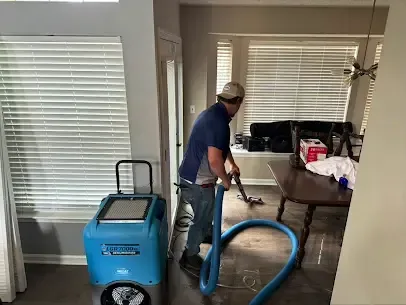
The restoration crew handles what the leak already released. It maps moisture in the floor, wall bases and cabinets, pulls standing water, and sets drying equipment.
A slab leak water damage job usually runs alongside the plumber's work, with the crew coordinating around the area being opened.
What gets lifted, extracted and dried
On a slab, water that cannot evaporate stays trapped under the flooring. That is why materials are often lifted instead of dried in place.
- Carpet and pad: pulled back or removed where wet, because pad holds water against the concrete.
- Tile, wood and laminate: lifted in sections when readings show water trapped underneath.
- Baseboards and wall bases: removed so the bottom of the drywall can dry.
- Cabinet toe kicks: opened so the cabinet base and the floor beneath it get airflow.
Extraction first
Any standing water or soaked padding comes out before drying begins. Emergency water extraction uses truck-mounted or portable units and moisture checks of nearby walls.
Drying equipment
Air movers push dry air across the floor while dehumidifiers pull moisture out of the room. Daily readings show whether the slab and walls are trending toward the dry reference.
What slows drying on a concrete slab
Concrete holds moisture longer than wood framing, and flooring on top can seal it in. A floor that feels dry to the hand can still have wet concrete under it.
Structural drying is therefore measured, not guessed. The crew logs readings each visit and keeps equipment running until the numbers match the dry reference, which follows the IICRC S500 standard.
- Sealed or glued flooring: traps moisture and often has to come up.
- Dense materials: concrete and tile release water slowly compared with drywall.
- Closed rooms: dehumidifiers work best when doors stay shut and equipment is left alone.
- Hidden cavities: cabinets and wall bases keep water unless they are opened.
Questions to ask before work begins
Two trades are usually involved, and a few plain questions keep the job moving.
- Plumber: which pipe is leaking, how will it be repaired and does the floor have to be opened?
- Plumber: can the repair be scheduled so the drying crew can work around it?
- Restoration crew: which flooring is coming up and which can stay?
- Restoration crew: how are moisture readings recorded and when will the equipment be checked?
Questions
Does a slab leak always leave a wet floor?
No. Water can travel under flooring or into wall bases without a visible puddle. A warm spot, a moving meter or swollen baseboards are often the first signs.
Can a slab leak be repaired without breaking the concrete?
Sometimes. A plumber may reroute the supply pipe through a wall or ceiling, or open a small section of slab. That decision belongs to the plumber.
Is a slab leak an emergency?
Water under pressure keeps flowing, so closing the main valve stops the damage from growing. The cleanup can begin while the repair is being scheduled.
How is a slab leak different from a burst pipe?
A slab leak is hidden under the floor, while a burst pipe or pinhole leak is usually inside a wall or ceiling where staining shows sooner.
How long does a slab have to dry?
It depends on how much water reached the concrete and what sits on top of it. Daily readings decide when the equipment comes out.
Can carpet stay in place during a slab leak repair?
Sometimes, if the wet area is small and the pad is lifted and dried. When water has spread under the carpet, pulling it back is usually faster.