Some rural lots in Poway rely on septic systems instead of a sewer connection. When a tank or drain field cannot take any more, the first sign is often a toilet that gurgles and a drain that will not clear.
Key takeaways
- Warning signs include slow drains in every fixture, gurgling pipes and sewage at the lowest drain in the house.
- Stop using water at once: no showers, laundry, dishwasher or flushing, because every gallon adds to the backup.
- Sewage is Category 3 water. Keep people and pets out and avoid touching anything wet without protective gear.
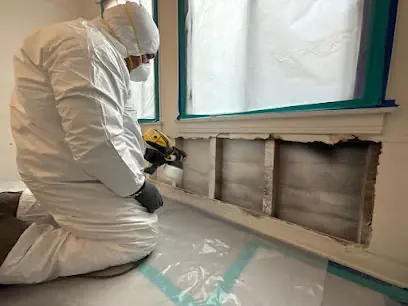
- Porous materials such as carpet, pad and lower drywall are removed, and hard surfaces are cleaned and treated.
- A septic pumper handles the tank and drain field. The restoration crew handles the contamination inside the building.
How a septic backup shows itself
A clogged drain affects one fixture. A septic problem tends to affect the whole house, because every drain leads to the same tank.
The backup usually surfaces at the lowest point first, often a shower, a tub or a floor drain.
Outdoor clues matter too: soggy ground, a strong odor or unusually green grass over the tank or drain field can show the system is struggling before anything reaches the house.
- Slow drains: sinks, tubs and toilets all drain slowly at the same time.
- Gurgling: air bubbles up through a drain when another fixture is used.
- Odor: a sewage smell in the house or over the tank area outdoors.
- Backup: dark water or waste rising in a shower, tub or floor drain.
Stop the flow of water into the system
Every gallon that goes down a drain ends up in the same tank, and a full tank pushes it back out the lowest opening.
Pausing water use is the single most useful step before help arrives, because it keeps the backup from spreading across the floor.
The same rule applies if the backup seems to clear on its own. A tank that is full will refill the moment water use resumes.
- No flushing and no running faucets.
- Hold laundry and the dishwasher until the tank is dealt with.
- Keep children and pets away from the affected room.
- Wear gloves and boots if anything has to be moved, and wash hands afterward.
Why sewage is handled as Category 3
Septic water carries bacteria and pathogens, so it is Category 3, the most contaminated class in the IICRC S500 standard.
That classification decides the work. Anything porous that touched it cannot be reliably cleaned, which is why the crew removes it.
What is removed
Carpet and pad, baseboards and the lower section of drywall are removed and bagged. Cabinet toe kicks may come off so the base can be cleaned.
What is cleaned and treated
Tile, concrete, sealed wood and other hard surfaces are cleaned, then treated with an antimicrobial. HEPA air scrubbers run while the work is under way.
Who handles what
A septic pumper empties and inspects the tank and drain field. A plumber handles broken or blocked pipes.
Neither of them cleans the contamination left inside the building.
Sewage and septic backup cleanup is the restoration side: containment, removal, cleaning and drying after the source is under control.
- Septic pumper: empties the tank, checks the inlet and outlet and looks at the drain field.
- Plumber: clears or repairs the pipe between the house and the tank.
- Restoration crew: contains the area, removes contaminated materials and dries the structure.
- Owner: arranges the tank work, since a septic system is private property.
Protecting the rest of the house
Contamination travels on shoes, towels and bare feet. A few simple habits keep it inside one room.
Closing the door to the affected area and shutting off the HVAC fan reduces how far odors and airborne particles spread.
- Set aside one pair of shoes for the cleanup area and keep them there.
- Hang plastic sheeting over doorways if the crew has not yet set up containment.
- Wash clothing and towels that touched the water separately and in hot water.
- Skip the household vacuum, which can spread what it picks up.
What to tell the restoration crew on the first call
A few clear facts help the crew plan containment and equipment before anyone walks in.
Photos taken from the doorway are enough. Nobody needs to step into the wet area for a picture.
- Where the water came up: which drain, which room and how far it spread.
- How long it has been there: since last night, over a weekend or since morning.
- What it touched: carpet, hardwood, tile, cabinets or stored boxes.
- Whether the tank has been pumped: and when the last pumping happened.
- Anyone with health concerns: young children, older relatives or pets in the house.
How the structure gets dried
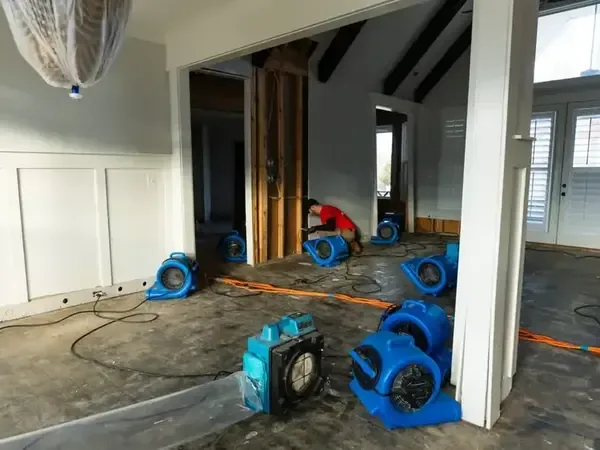
After removal, walls, framing and the slab are dried the same way as after any other water loss. Air movers and dehumidifiers run until moisture readings match a dry reference.
Structural drying is logged each visit so there is a record that the area is dry before anything is rebuilt.
Water can pool before it is cleaned up, so water extraction is the first physical step once the area is safe to enter.
Odors, air and what comes after the cleanup
Smell is the last thing to go. It lingers in padding, drywall and the tiny gaps along baseboards, which is why those materials come out instead of being deodorized.
After the area is dry and the odor is gone, flooring, drywall and trim are replaced by a general contractor or a flooring installer.
Air scrubbing and treatment
HEPA air scrubbers pull fine particles out of the air during removal. Antimicrobial treatment follows on the surfaces that stay.
Rebuilding comes last
Rebuilding waits for dry readings. Closing up wet framing traps moisture, and the smell can return.
What to keep in mind on a rural Poway lot
A septic system is private property, so the owner arranges the tank work instead of reporting a problem to a public sewer main.
Heavy use, such as guests, extra laundry or a long rainy spell, is a common trigger. Having a pumper on file saves time when a backup does happen.
Questions
How can a homeowner tell a septic backup from a clogged drain?
A single slow fixture points to a local clog. Slow drains everywhere, gurgling and waste surfacing at the lowest drain point to the tank.
Should the tank be pumped before the cleanup starts?
The tank usually needs attention first, because cleanup does not help if waste keeps coming back. The pumper and the restoration crew can work in sequence, with the crew starting containment and removal once the source is under control.
Can the carpet be saved after a septic backup?
Rarely. Sewage is Category 3, and porous materials are normally removed instead of cleaned.
Is it safe to stay in the house?
It depends on how far the contamination spread. At minimum, keep children and pets out of the affected rooms and avoid touching wet materials.
Does bleach fix a sewage backup?
No. Bleach does not reach contamination inside porous materials, and it cannot replace removal and professional treatment.
Why does a backup show up in the shower first?
The shower or tub drain is often the lowest opening in the house, so waste pushes out there before it reaches a higher fixture.